
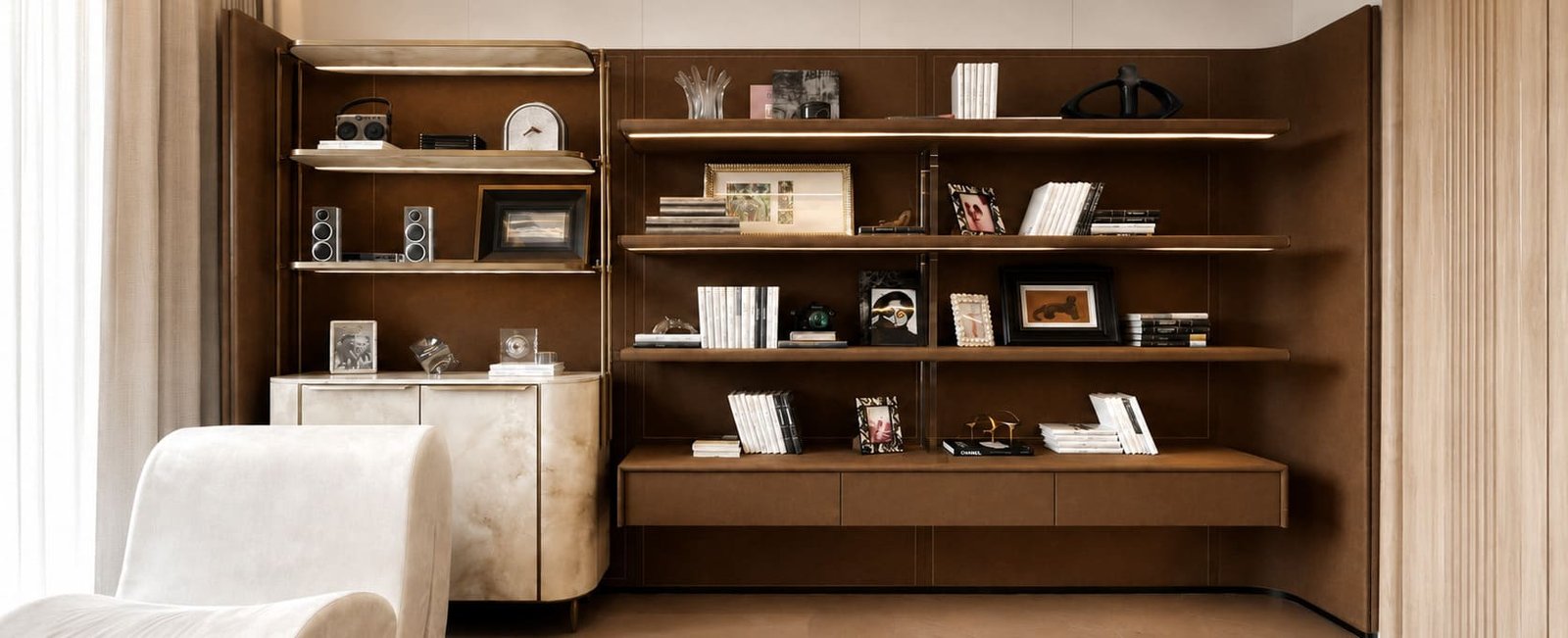
Many companies begin because of an opportunity, a project, or help from an important person. As the first blog post of Horace Home, I want to start by sharing how this factory was founded.
It did not come from a carefully prepared business plan. It was not started because a sudden market opportunity appeared. It was more like a decision made by a technical person who, after many years of work, wanted to do one thing properly.
Starting From Frontline Woodworking in 1997
In China in the 1990s, many young people from inland regions chose to work in coastal cities. Compared with Chongqing at that time, Guangdong had a stronger manufacturing base, more factory opportunities, and more attractive income.
In 1997, Mr. Mo was 23 years old. Mr. Mo is my boss and also the founder of Horace Home. With 2,000 RMB, which was not a small amount of money at that time, he went to Foshan, Guangdong, and applied for a woodworking job in a furniture and woodwork factory. That was his first contact with custom furniture and woodwork production.
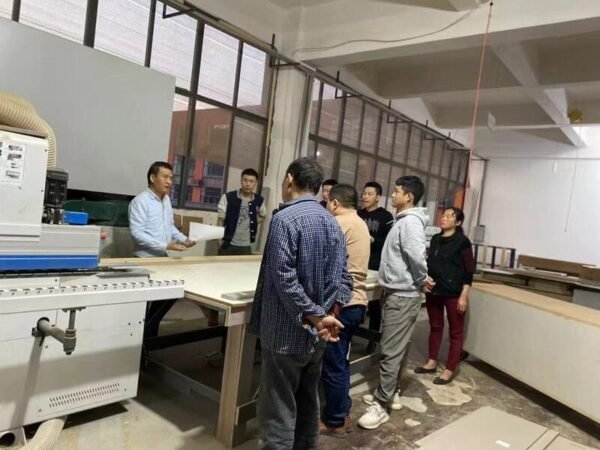
When he first entered the factory, he had almost no industry experience. Every day, he followed experienced woodworkers and learned the basic processes step by step, including reading drawings, cutting panels, sanding, edge banding, and veneer application.
Factory production at that time did not have as much automation as today. Many details still depended on the experience and hand skills of the workers. Cutting, edge banding, drilling, assembly, sanding, and judging on-site problems all required long-term experience, structural understanding, and practical craftsmanship. Through hard work, Mr. Mo slowly grew from a frontline woodworker into a woodworking team leader.
This early experience helped him gradually understand the main processes inside a custom furniture and woodwork workshop. It also gave him strong production judgment: whether a panel connection was stable, whether an edge detail was reasonable, and whether a structure was practical for production.
Returning to Chongqing in 2012 and Becoming a Designer
Because of family reasons, he left the Foshan factory in 2012 after working there for 15 years and returned to Chongqing.
After coming back, he did not continue looking for another woodworking job. Based on the CAD drawing skills he had learned by himself in the factory, together with his production experience from the workshop, he found a job as a whole-home custom furniture designer.
His income was much lower than before, but for him, this was an important change. When he worked on the production line, he cared more about questions such as, “How can this be made?” and “Will there be quality problems after it is made?” As a designer, he started to think about different questions: “What does this space need?” and “Can the effect the client wants actually be built?”
Because of his woodworking background, he did not only focus on appearance when discussing designs with clients. He would naturally think further: Can this design be produced? Is the structure reasonable? Can the final result really meet the client’s needs?
This experience gave him a deeper understanding of whole-home customization. A good design is not only about understanding what the client wants. It also needs to consider whether the drawings based on the client’s needs can truly be produced. If design and production are disconnected, the final product may fail to meet the client’s expectations.
A Project Problem That Changed His Role
Later, one real estate sales center project changed his role.
He was responsible for the design of that project, but the factory faced repeated production problems. The production schedule could not match the project owner’s required delivery timeline. The project manager kept complaining that he could not coordinate the factory and that the project owner was pushing for delivery.
Mr. Mo decided to go directly to the factory and follow the production on site. He helped push the production problems forward one by one. He checked which parts of the drawings were not clear, which details were not properly connected between design and production, and which parts needed to be adjusted so production could continue.
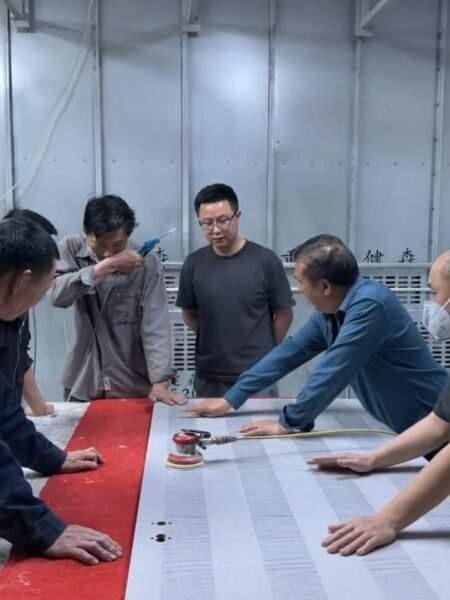
After the production problems were handled, he went to the project site to follow the installation work. When the site dimensions were different from the original drawings, he first judged which parts could be adjusted and which parts should not be changed. Then, without affecting the structure or the final appearance, he helped make local adjustments to the cabinets on site. He also checked the closing details one by one, because these small details are often easy to overlook.
In the end, the project was delivered to the project owner on time. After that, his role changed from designer to project manager.
That experience made him truly realize that whole-home customization cannot be completed by design or production alone. It requires connection and coordination between design, production, and installation. Design needs to understand production limits. Production needs to understand the design intention. Site installation needs to consider dimensions, tolerances, and finishing details.
The Turning Point That Led to the Factory
In 2017, something happened that directly pushed Horace Home toward its founding.
A client wanted a cabinet where the finished surface would show as little visible hardware as possible. In simple words, the client wanted the cabinet to look cleaner, with the connection structure hidden as much as possible.
At that time, Mr. Mo thought about adjusting the structure around the three-in-one connector commonly used in panel furniture. The three-in-one connector itself was not new. Many cabinets used it. But with common methods, holes or hardware marks would often remain visible inside the cabinet or in certain positions. A standard installation method could not achieve the clean appearance the client wanted.
The real difficulty was this: the connector needed to be hidden, but the cabinet structure could not become loose. The hole positions had to be reconsidered, but the production process still had to remain controllable. The installation sequence had to be adjusted, but the installers on site still needed to assemble the cabinet smoothly. It was not just about changing one piece of hardware. The structure, drilling, processing, assembly, and installation logic all had to be reconsidered.
He first contacted the factory manager of the company he worked for at that time, but the answer was that it could not be done. He did not give up and continued to contact many factories in Chongqing, hoping to find a production solution that could make this structure work. Most of the feedback was the same: it could not be done, or there was no mature method.
He stopped looking for other factories. Starting that night, he began to break down and sort through the technical problems by himself. In the end, he worked out the main structural issues and production logic, and created a workable set of design drawings. The next day, he made a decision: he would buy equipment and start his own factory.
That was how Horace Home was officially founded in 2017.
This decision was not made on impulse, and it was not because he suddenly saw a large market opportunity. The real reason was that he realized some custom ideas could only be properly carried out when design, technical judgment, and production were understood within the same system. He understood that if he truly wanted to help clients turn custom ideas into real products, he needed a factory where he could directly participate in design, technical decisions, and production judgment.
Horace Home Today
Today, Horace Home is a China-based custom cabinetry and whole-home woodwork factory located in Chongqing.
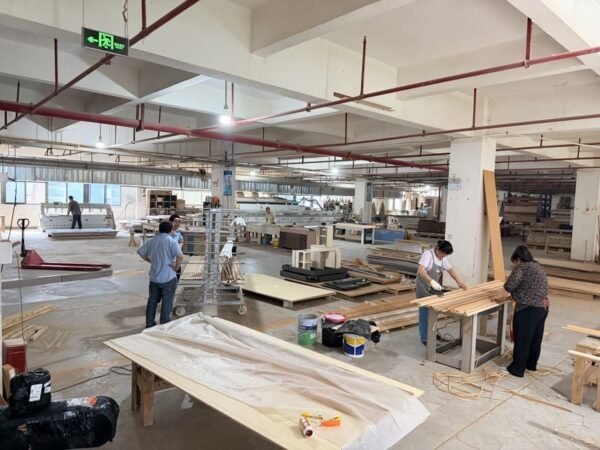
We are still not a large low-cost mass production factory, and we do not want to package ourselves as a large factory that can do everything. We do not sell mainly through fixed standard product models. Instead, we produce according to the client’s dimensions, drawings, material direction, and space requirements. We are more suitable for custom orders with clear requirements for size, material, structure, and appearance.
The custom route is not easy. It means many orders cannot simply be copied, and the cost cannot be pushed as low as standard panel furniture. But we still choose this path because we want to work with clients to turn their ideas and requirements into real products.
This path is not easy, but it has been the direction Horace Home chose from the beginning.
Final Notes
The beginning of Horace Home was not complicated. It came from the craftsmanship a woodworker built over many years, and from the repeated problem-solving experience of a designer who went into production workshops and installation sites.
We still have a long way to go, and we still need to keep growing. But we hope this path will always stay clear, practical, and real. For us, trust is not built through a few polished words. It is built slowly, each time we make dimensions, materials, structures, and site conditions clear and solid.