
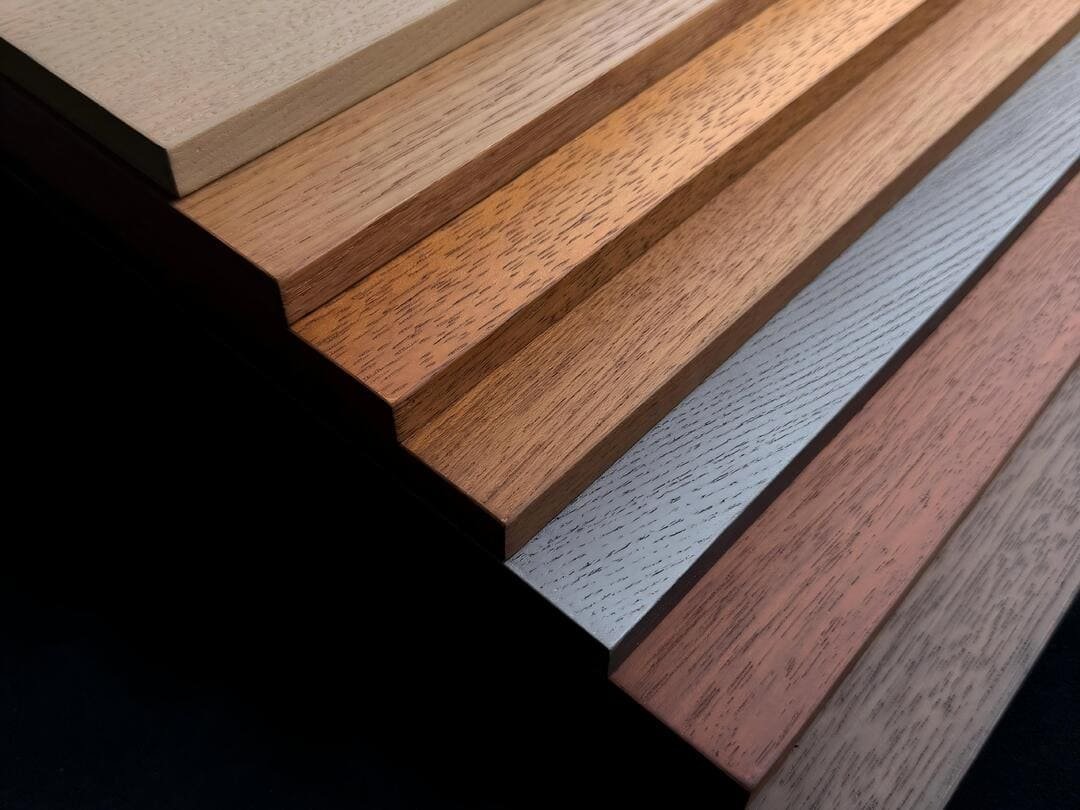
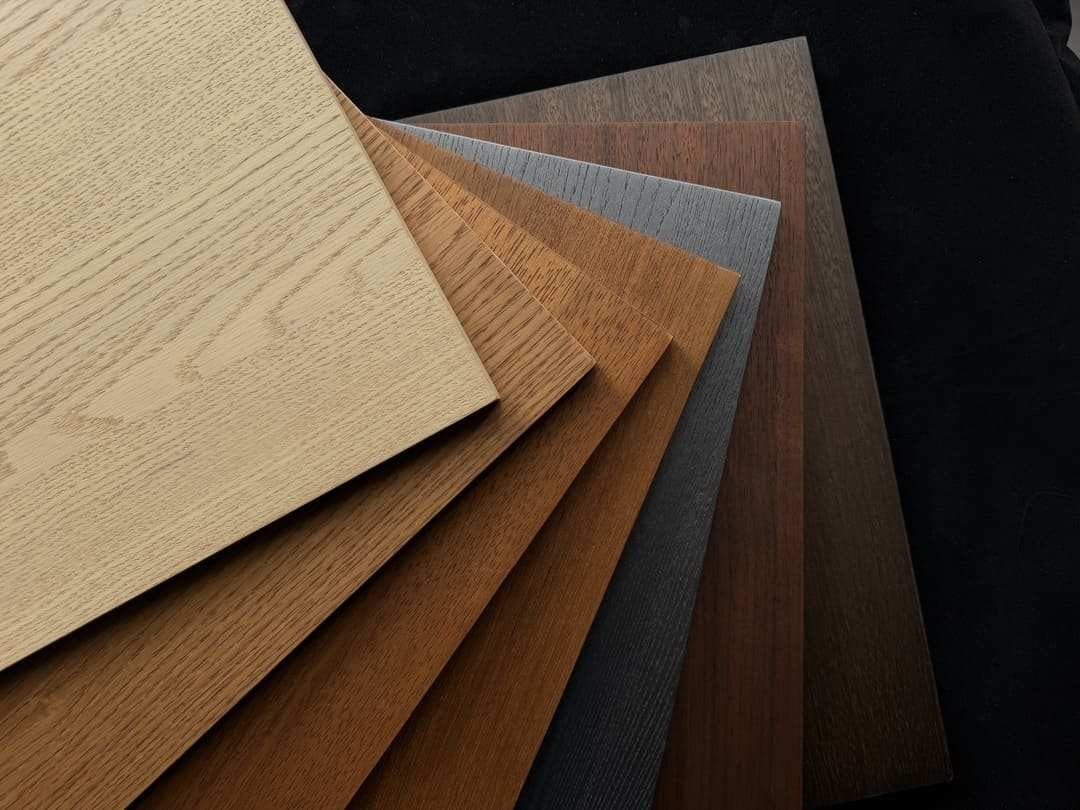
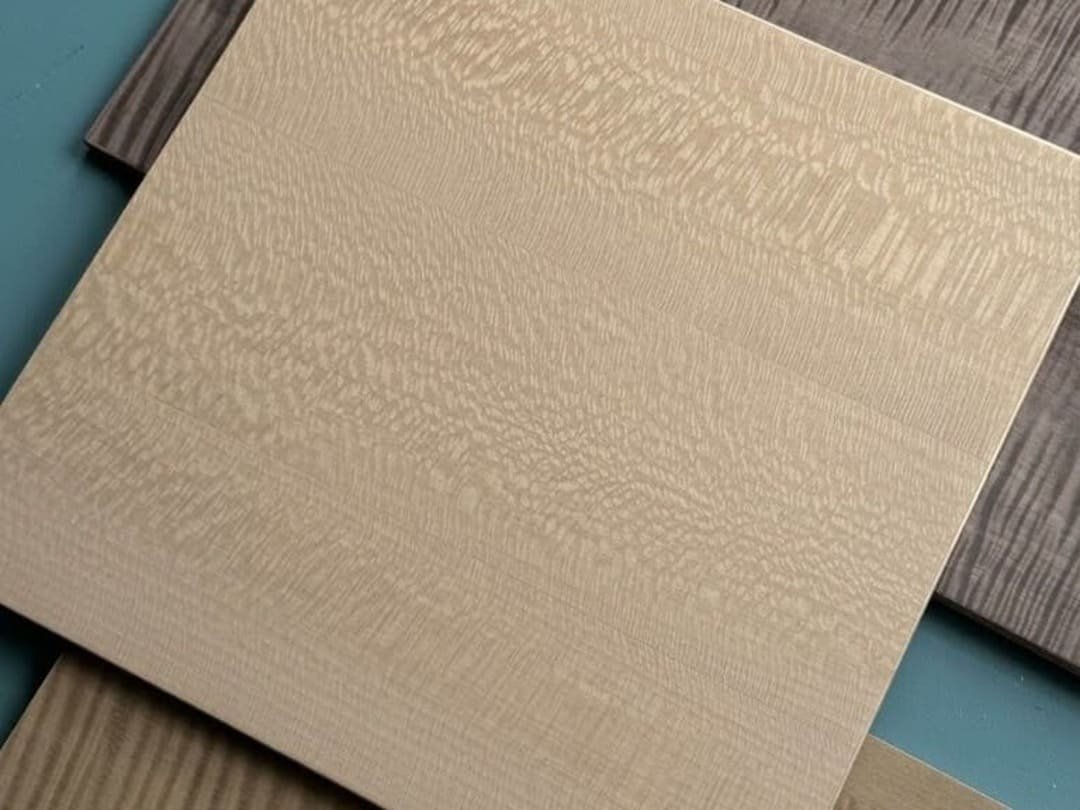
Presents real wood grain with a natural texture, suitable for mid-to-high-end woodwork. It can be finished with open-grain finish, closed-pore finish, staining, smoked effect, distressed effect, veneer matching and grain matching.
Plywood, MDF, particle board, aluminum honeycomb composite panel
Flat cabinet doors, shallow-groove doors, moulding door panels, wall panels, background wall panels and large flat woodwork surfaces. Not suitable for very deep grooves, complex carving or large curved surface wrapping.
High-end cabinet doors, wall panels, wine cabinets, bookcases, hotel woodwork, high-end residential woodwork, office woodwork, background walls, commercial display cabinets, hotel fixed furniture and wall-cabinet integrated systems.
Long-term humid areas, low-budget projects, projects that require completely uniform color without variation, or projects with low tolerance for natural wood grain differences, grain matching variation or batch color differences.
Real wood texture, better stability than solid wood and suitable for mid-to-high-end projects. It can achieve a solid-wood-like visual effect while improving structural stability and cost control.
Higher cost, obvious natural color variation, and higher requirements for veneer matching and grain matching. If the substrate is not flat, the veneer lamination is unstable or the edge sealing is not properly handled, problems such as hollow spots, cracking, edge lifting or finish defects may occur.
Focus on veneer thickness, veneer direction, color variation, sanding depth, finishing effect and edge sealing. Natural veneer samples and bulk production may show differences. Large wall panels or hotel woodwork should pay special attention to grain matching, batch consistency, edge details and the effect of on-site humidity.
Share your drawings, dimensions, reference images, or project requirements. Our team can help suggest suitable material options before production.