
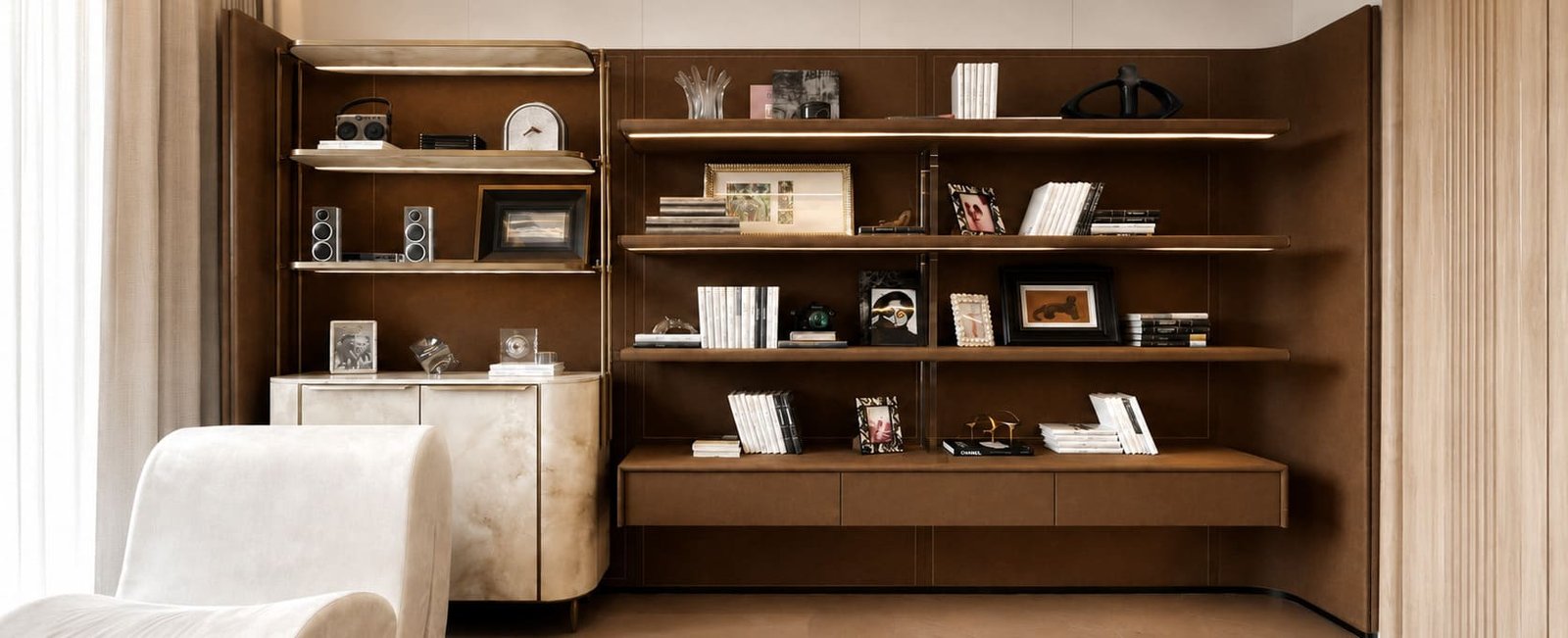
Some time ago, a B2B client contacted us about a problem with dyed wood veneer. One of his previous projects used dyed natural figured wood veneer, and the finished surfaces developed obvious color differences.
According to the client, the project had only been installed for a few months, and the homeowner had not even moved in yet. Some of the veneer surfaces had already developed noticeable color differences. The areas near windows and balconies showed more obvious color change and yellowing.
When we heard this, we first suspected that the problem could be related to color change under light exposure, especially because the client said the areas near windows and balconies had changed more clearly.
In fact, dyed veneer is not the only material that changes over time. Natural wood veneer itself can also change color because of light and aging. Dyeing, staining, and the final coating system can make the final color change more complicated.
Are Fading, Yellowing, and Color Change the Same Thing?
In our factory, we sometimes simply call gradual wood color change “fading.” But technically, these changes are not exactly the same.
| Type of Change | What You May See |
|---|---|
| Fading | The original color becomes lighter, less vivid, or less saturated |
| Yellowing | The color moves toward yellow or a warmer tone |
| Darkening | The wood becomes darker over time and with light exposure |
| Discoloration / Color Change | A broader term that can include lightening, darkening, yellowing, reddening, greening, or visible differences between areas |
This difference matters because different types of color change can have different causes.
For example, if a client sees that a veneer surface has become yellow, it does not automatically mean that the wood veneer itself has yellowed.
What the client sees is the result of a complete finish system. This may include the wood itself, dye or stain, and the clear coat.
A change in any one of these layers can affect the final visible color.
Natural Wood Veneer Also Changes Color Over Time
Natural wood is not a material with a permanently fixed color.
Lignin, extractives, and other chemical components in wood can be affected by light and time. Because of this, even untreated natural veneer can change color during use.1
Different wood species do not change in the same way.
Some woods may become darker. Some may become warmer. Others may become lighter or shift toward a different tone. The speed of these changes can also be affected by light intensity, light source, the use environment, and the surface coating.
So, if veneer changes color after a period of use, this does not automatically mean there is a manufacturing quality problem.
What we really need to check is whether the change becomes visually obvious in a short period of time, and whether one continuous visible surface develops uneven color changes.
The second issue is often more important for the appearance of custom cabinetry.
Does the Color Change Come from the Wood, the Dye, or the Clear Coat?
For custom cabinetry, we usually look at the final color as a combination of several parts.
In actual production, at least three factors need to be considered:
| Source | Possible Color Change |
|---|---|
| Natural wood itself | It may become darker, lighter, warmer, or shift toward another tone over time and with light exposure |
| Dye, stain, or color adjustment | The color may gradually lose brightness or change tone under light exposure |
| Clear coat | The coating itself may yellow or change color over time, and it can also affect the final visible color of the veneer |
There is also more than one way to create the final veneer color.
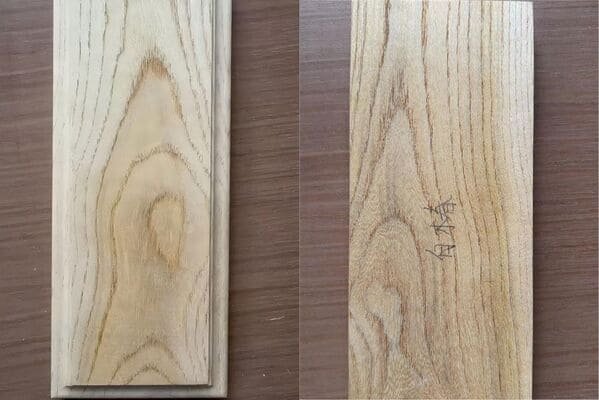
Some veneers are bleached first to make the base color more uniform, and then dyed. In other projects, we may use natural veneer and apply stain, color adjustment, and the final coating in our factory.
So, even if two cabinet doors look similar in color, they may have reached that color in different ways.
This is also why we cannot immediately blame the veneer itself when a client sees fading or yellowing. The wood, the color treatment, and the final coating can all affect the final result.
Dyed veneer is more complicated because it still has the natural color behavior of real wood, but it also adds the dye as another factor.
When we look at veneer color changes, we do not only ask what wood species was used. We also need to know how the veneer was treated before finishing and what coating system was applied afterward.
Why Is Color Change More Complicated with Dyed Veneer?
Dyed veneer is still natural wood veneer. It simply adds another color treatment to the natural material.
In some cases, the veneer is bleached first and then dyed. This can help create a more uniform starting color and make it easier to reach the required design effect.
But a more uniform initial color does not mean better long-term color stability.2
In other words, making the color more consistent during production and keeping that color stable under long-term light exposure are two different issues.
After dyeing, the final color depends not only on the natural wood but also on how stable the dye is under long-term light exposure. Different wood species, dyes, pretreatments, and clear coats can all affect the final result.
So, two products that are both called “dyed veneer” may behave very differently over time.
Some may gradually become lighter. Some may develop yellowing or another color shift. In other cases, different areas may change at different speeds and create visible color differences across one continuous surface.
This is why we do not assume that dyed veneer will stay the same forever just because the color looks consistent when production is finished.
For custom cabinetry, what matters is how the whole finish system changes in the actual use environment, not only how it looks when production is finished.
This is especially important for areas near windows, balconies, or other locations with stronger long-term light exposure.
Can Direct Sunlight, Natural Light, and Indoor Lighting Affect Veneer Color?
All of them can potentially affect veneer color, although the level of influence is different.
Direct sunlight normally has a stronger effect because the overall light intensity is higher, and it contains ultraviolet and visible light that can cause photochemical changes in wood and some coloring systems.
However, color change does not only happen under direct sunlight. Natural daylight and even continuous indoor lighting may gradually affect the wood, dye, or stained surface.
We have seen a clear example of this in our own factory.
We once produced a batch of cherry veneer panels. The veneer was first bleached, then stained and color-adjusted in our factory, and finally coated.
After finishing, the panels were placed on racks in the paint workshop for about 3–4 days. Most of one lower panel was covered by the panel above it, while a small area remained exposed.
When the panels were moved, we could already see a slight but visible color difference between the covered area and the area that had not been fully covered.
This observation does not prove that indoor lighting was the only cause of the color difference. The panels included several variables at the same time, including the wood, the stain, and the coating. The way the panels were stacked may also have affected local airflow and how the coating continued to dry and cure.
But this factory observation made us pay more attention to one issue:
If different areas of a finished wood surface stay under different exposure conditions, visible color differences may appear over time.
Published studies on wood and light exposure also show that artificial lighting can affect wood color. So when we discuss veneer fading, we do not only look at whether there is direct sunlight.3
We also consider light intensity, daily exposure time, whether different areas receive similar light, and whether some areas stay covered for a long time.
For large cabinet doors, wardrobe walls, or wood wall panels, these differences can later become much more visible.
Why Can One Row of Cabinet Doors Develop Uneven Color Differences?
For custom cabinetry, the main visual problem is often not that all veneer surfaces slowly change color together.
The bigger problem is that different areas change at different speeds.
For example, in the same row of cabinet doors, the areas near a window may receive stronger daylight. Areas near a balcony may receive direct sunlight for a longer time. Cabinet doors deeper inside the room may receive much less light.
Some areas may also stay covered by furniture, decorative objects, or other items for a long time.
Because these areas receive different light exposure, they may gradually develop visible color differences even if they looked consistent when first installed.
A client once shared a very clear example with us.
He had a cherry wood desk at home and kept several books in the same place for a long time. When he finally moved the books, the covered area had a clear color difference from the surrounding surface.
After the books were removed and the covered area started receiving light again, the color slowly began to move closer to the surrounding area.
This client example shows a practical point: if one part of a wood surface stays exposed to light while another part stays covered, the two areas may change color at different speeds.
For large veneer cabinet doors, wardrobe walls, or wood wall panels, we are therefore less concerned about whether the whole surface will look slightly different after several years.
What concerns us more is whether windows, covered areas, or different orientations will cause obvious local color differences too early.
This should be considered when choosing materials and planning the finish system.
How Can a Project Make Color Change Slower and More Even?
If a client asks us whether wood veneer can be made completely fade-resistant, we will not make that promise.
For natural veneer, a more realistic goal is to slow down the color change and reduce obvious local differences across one continuous visible surface.
In a project, we usually consider several points.
The first is whether the material itself is suitable for the location.
For example, with the dyed natural figured wood veneer mentioned earlier, if the cabinetry is close to windows or balconies and will receive strong sunlight, we may consider using a melamine-faced board with a similar figured wood appearance if the client does not strictly require natural veneer.
This does not mean that melamine finishes never change color. It simply avoids the same “natural wood + dye + final coating” color system.
If the project must use dyed natural veneer, the second point is to reduce strong or very uneven light exposure as much as possible.
For example, long-term direct sunlight can be reduced. Curtains or other shading methods can help lower exposure near windows. On large continuous surfaces, it is also better to avoid situations where one area stays exposed while another area remains covered for a long time.
The third point is the coloring and coating system.
We have discussed some common methods with other manufacturers and natural veneer suppliers. For example, after sanding and coloring, the veneer may first receive a color-fixing and sealing treatment before the primer. The topcoat system may also use materials or additives designed to improve yellowing resistance or UV protection.
However, we do not currently have our own accelerated aging test data, and we have not verified how long any specific additive can keep the color stable.
So we prefer to describe these methods as ways to slow down the change, not completely stop it.4
For us, material selection, light exposure, and the coating system need to be considered together.
What Should Project Buyers Confirm?
If a project is sensitive to veneer color, the client should consider more than just the color at the time of production.
Color approval should be based on a physical sample with the final coating, not only on the raw veneer. Bleaching, dyeing, staining, color adjustment, and the clear coat can all affect the final appearance.
But this approved sample represents the initial color and appearance accepted for production.
It is not a guarantee that the color will remain exactly the same several years later.
For veneer surfaces near windows, balconies, or large continuous areas, we also think the actual light exposure should be discussed in advance, together with how much natural color change the project can accept over time.
Future replacement or additional cabinet doors should also be considered.
Existing doors may already have changed color after being used for some time, so a newly produced veneer panel may not immediately match the older surface perfectly.
For this reason, these projects should confirm not only whether the color is correct today, but also the real light exposure in the space and whether the expected long-term color change is acceptable for the project.
Which Veneer Color Differences Are Not the “Fading” Discussed Here?
Not every veneer color problem is caused by long-term light exposure.
For example, in one of our previous articles, we discussed blue-black or black spots on white oak veneer caused by an iron-tannin reaction. That problem is different from the color changes caused by long-term light exposure discussed in this article.
Production contamination, inconsistent local color adjustment or coating, and original color differences between veneer batches can also appear as “color differences.”
So when veneer shows an obvious color difference, we should not immediately call it fading.
The main issue discussed in this article is the gradual color change that develops over time under different light exposure conditions.
Final Notes
One of the main reasons people choose natural wood veneer is that it keeps the real grain, color, and natural variation of wood. Natural wood will not keep exactly the same color forever like a printed decorative surface.
When choosing natural veneer, we do not think every color change is a problem that must be avoided. If the change is slow, natural, and visually balanced, the wood can show a different appearance and feel as it ages.
For veneer cabinetry, Horace Home does not define the goal as “keeping the color unchanged forever.” Our goal is to slow down the change as much as reasonably possible and help the color across one continuous visible surface change in a more natural and even way.
Based on information from the BioResources review *Structural Changes in Wood under Artificial UV Light Irradiation Determined by FTIR Spectroscopy and Color Measurements*. ↩
Based on information from the BioResources study *Effect of Bleach Pretreatment on Surface Discoloration of Dyed Wood Veneer Exposed to Artificial Light Irradiation*. ↩
Based on information from the Heritage Science study *Wood Discoloration Patterns Depending on the Light Source*. ↩
Based on information from the Polymers study *Wood Surface Finishing with Transparent Lacquers Intended for Indoor Use, and the Colour Resistance of These Surfaces during Accelerated Aging*. ↩