
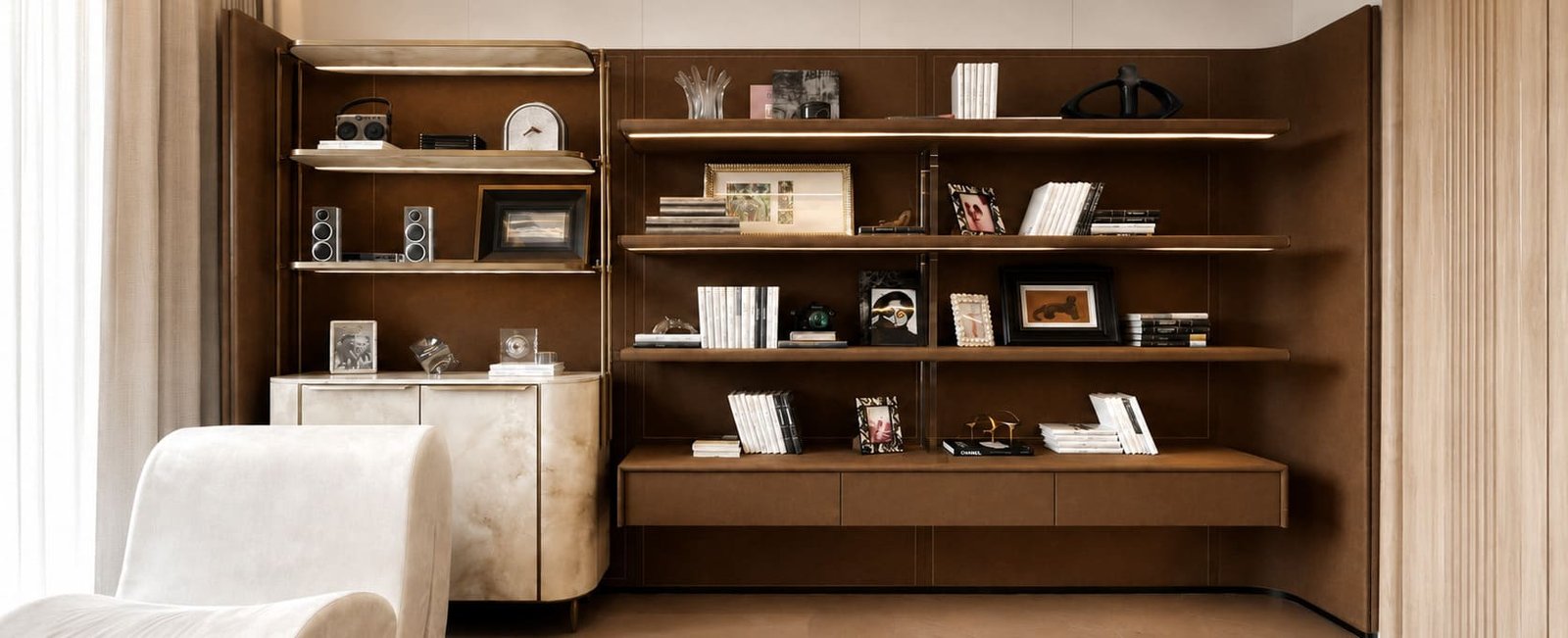
For standard-size custom cabinet doors, engineered wood panels such as plywood, particleboard, or MDF can usually meet the requirements. However, when the panel size is large, or when the project is located in an area with significant changes in temperature and humidity, we may consider aluminum honeycomb panels to reduce the risk of bending and warping.
Aluminum honeycomb panels have a different structure from conventional wood-based panels. They also require different processing and connection methods. In this article, we will start with the material itself and explain its basic structure, common construction methods, and actual applications in custom cabinet doors.
What Is an Aluminum Honeycomb Panel?
An aluminum honeycomb panel is a type of sandwich panel. The middle layer is an aluminum honeycomb core, with facing panels bonded to both sides. Unlike plywood, particleboard, and MDF, its core is not a continuous solid structure. Instead, it contains many honeycomb-shaped hollow cells.
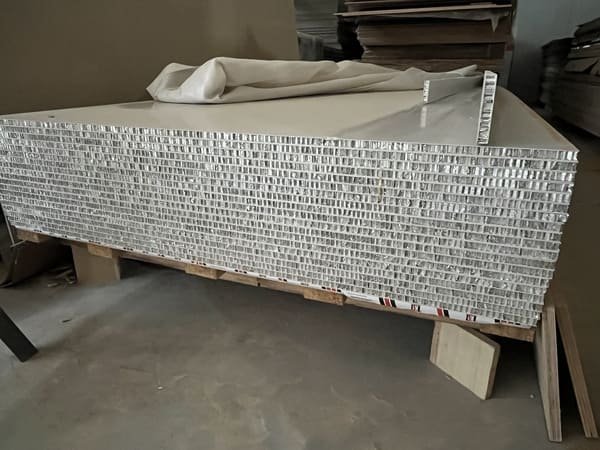
In actual use, the aluminum honeycomb core is usually not used directly as the finished panel. Suppliers bond facing panels to both sides according to the required specification. Further processing is then carried out according to the finish required for the project.
What Are the Characteristics of the Sandwich Structure of Aluminum Honeycomb Panels?
The performance of an aluminum honeycomb panel mainly comes from its sandwich structure. The facing panels and the honeycomb core are bonded together to form one complete structure. Compared with conventional wood-based panels, this structure has clear differences in weight, stiffness, and the control of bending and deformation in large panels.
Lightweight
The honeycomb core is made from thin aluminum and forms a hollow structure. Therefore, for the same panel thickness, less solid core material is required.
This is one of the most obvious characteristics of an aluminum honeycomb structure. For larger cabinet doors, using thick wood-based panels throughout the whole door can significantly increase the weight as the panel size increases. A honeycomb structure can maintain a certain overall panel thickness while controlling the weight.
High Stiffness-to-Weight Ratio
In a sandwich structure, the two facing panels are separated by the honeycomb core, increasing the overall structural thickness of the panel. The facing panels mainly resist bending, while the honeycomb core supports the facing panels and transfers shear forces. This structure can provide relatively high bending stiffness without adding too much weight.1
This is also one of the reasons why honeycomb sandwich structures have long been used in aviation, transportation, and other lightweight applications. In research related to sandwich structures, a high stiffness-to-weight ratio is one of the commonly discussed characteristics.
More Suitable for Controlling Bending and Deformation in Large Panels
As the size of a conventional wood-based panel increases, factors such as the panel's own weight, internal stress, unbalanced finishes on both sides, and the actual use conditions can increase the risk of bending and warping.
An aluminum honeycomb sandwich structure bonds the honeycomb core and the two facing panels into one structure. It creates a relatively thick structure at a lower weight, so it is more suitable for applications where bending in large panels needs to be controlled.
More Suitable for Reducing Deformation Risk in Areas with Large Temperature and Humidity Changes
The moisture content of wood and wood-based panels changes with environmental humidity, which may also cause dimensional changes. Based on the public information we reviewed, the USDA Forest Products Laboratory's Wood Handbook also identifies humidity, moisture content, and dimensional changes as important factors in the use of wood.2
The aluminum honeycomb core itself does not have the same swelling and shrinkage caused by moisture absorption and moisture loss in wood fibers. Therefore, for large cabinet doors in areas with significant humidity changes, or in projects with large temperature differences, we may consider an aluminum honeycomb structure as one way to reduce deformation risk.
The Performance of an Aluminum Honeycomb Panel Depends on the Complete Sandwich Structure
The performance of an aluminum honeycomb panel cannot be judged only by the honeycomb core. The basic sandwich structure consists of the two facing panels, the honeycomb core, and the adhesive layer. These parts need to form a stable bond before the complete panel can provide its intended structural performance.
Therefore, the lightweight construction, stiffness, and deformation control mentioned above cannot be judged only by the honeycomb core. The facing material, panel thickness, bonding quality, and final panel size also need to be considered together.
How Do We Use Aluminum Honeycomb Panels in Custom Cabinet Doors?
The aluminum honeycomb panels we currently purchase are not limited to fixed sheet sizes. They can be customized according to the actual panel size. The aluminum honeycomb core thicknesses we have used are mainly 15 mm and 18 mm. The specific thickness is selected according to the cabinet door size, the materials laminated on both sides, and the final panel thickness.
The aluminum honeycomb panels supplied to us are usually already made with a honeycomb core and facing panels. The facing materials we have worked with include aluminum alloy panels and SPC panels. Plywood facing panels can also be customized if required.
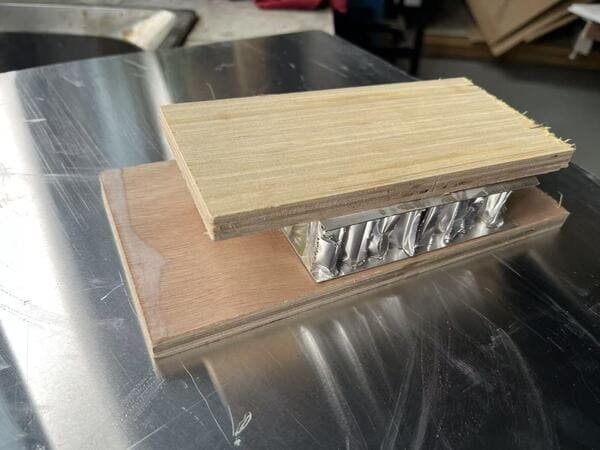
After the material arrives at our factory, we may laminate additional plywood onto the outside of the existing facing panels according to the final cabinet door finish. The plywood thicknesses we have used are mainly 3 mm and 5 mm. The surface can then be finished with melamine, or with wood veneer and paint.
What Should We Pay Attention to When Processing Aluminum Honeycomb Cabinet Doors?
When aluminum honeycomb panels arrive at our factory, we first check the flatness of the panel surface. The inspection method is basically the same as for the other panel materials introduced in our previous articles. We mainly check for obvious warping or deformation. Because additional plywood and finishes will be laminated later, obvious unevenness in the incoming aluminum honeycomb panel can affect the later processing steps.
For cutting, we currently use a sliding table saw. Unlike conventional wood-based panels, the aluminum honeycomb core has a hollow internal structure. Therefore, the edges and hardware installation positions cannot be handled in exactly the same way as conventional wood-based panels.
To deal with this, we add a 50 mm-wide plywood strip around all four sides of the aluminum honeycomb core. The plywood strip has the same thickness as the honeycomb core. After the complete panel is laminated, this creates a continuous wood-based area around the edges. It can be used for edge banding and also provides a solid fixing area for hardware close to the edges.
For connection hardware installed inside the panel, we also use special embedded connectors for aluminum honeycomb panels. These connectors are installed into the internal structure of the aluminum honeycomb panel in advance, and the hardware is then fixed to the connectors. For this reason, hardware positions should preferably be confirmed before production. Later changes are more limited than with conventional wood-based panels.
Bonding during panel lamination is another issue we have encountered in actual production. The first time we laminated plywood onto an aluminum honeycomb base panel, we used white glue, but the overall bonding result was not satisfactory. We later changed to polyurethane panel adhesive. Although we have not carried out laboratory-level bonding strength tests, the bonding was more stable during later processing than when we used white glue. We currently use this type of adhesive for these composite panels.
When Do We Consider Using Aluminum Honeycomb Panels?
We do not use aluminum honeycomb panels as the default choice for every cabinet door. For standard-size cabinet doors, if conventional wood-based panels can already meet the requirements, we normally still prefer plywood, particleboard, or MDF.
We mainly consider aluminum honeycomb structures when the panel size is large, when a conventional wood-based construction would make the cabinet door too heavy, or when the project is located in an area with significant temperature and humidity changes.
If the cabinet door is not very large, the use environment is relatively stable, and the customer is sensitive to budget, we normally do not recommend aluminum honeycomb panels as the first choice. The material combination, lamination process, and hardware connection methods are more complicated than with conventional wood-based panels. If there is no clear need for this structure, the additional cost is usually unnecessary.
What Have We Observed from Aluminum Honeycomb Cabinet Doors in Actual Projects?
Namu Lake Hotel in Bipenggou
For the Namu Lake Hotel project in Bipenggou, we considered the large temperature differences in the local environment and used an aluminum honeycomb structure for the cabinet doors. The construction used an 18 mm aluminum honeycomb core with 3 mm plywood laminated on each side, followed by a wood veneer and painted finish.
About six months after installation, we have not observed the obvious cabinet door deformation that we were originally concerned about. However, during actual use, we felt that the cabinet doors made with this structure were slightly too light.
This observation also affected our later choice of plywood thickness on both sides of the aluminum honeycomb core.
Another 3.9 m High Cabinet Door Project
In another project, we had a very tall cabinet door measuring about 3.9 m × 0.8 m. Because of the large panel height, we were more concerned about long-term bending and deformation if the door was made entirely from conventional wood-based panels. We therefore continued to use an aluminum honeycomb structure.
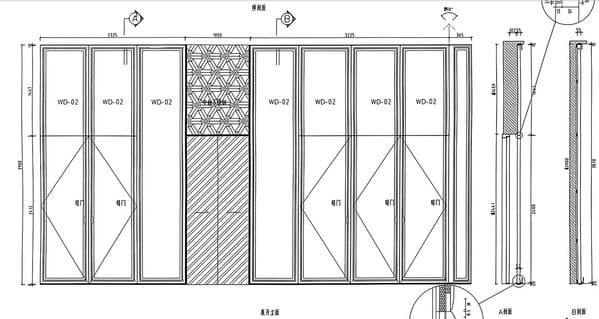
For this project, we adjusted the construction to a 15 mm aluminum honeycomb core with 5 mm plywood laminated on each side. Compared with the 3 mm plywood used in the Bipenggou project, we increased the thickness of the plywood on both sides. The aim was to keep the characteristics of the aluminum honeycomb structure while making the overall cabinet door structure and weight more suitable.
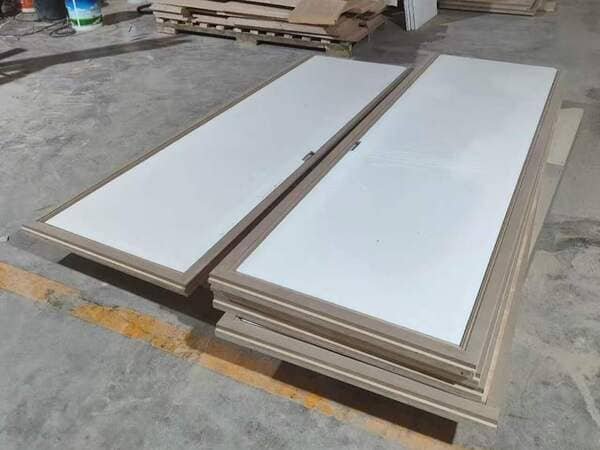
These cabinet doors have now been completed and will be installed soon. Therefore, at this point, we can only describe the production method and what we observed during manufacturing. We cannot yet draw conclusions about their long-term performance after installation.
Final Notes
Aluminum honeycomb panels are not a general replacement for plywood, particleboard, or MDF. They are another structural option when weight and deformation risk need to be controlled under specific conditions.
For this type of custom cabinet door, Horace Home determines the structure based on the panel size, finish, and actual use conditions. If conventional wood-based panels are difficult to use under the required conditions, we can evaluate whether an aluminum honeycomb structure is needed during the early material confirmation stage.