
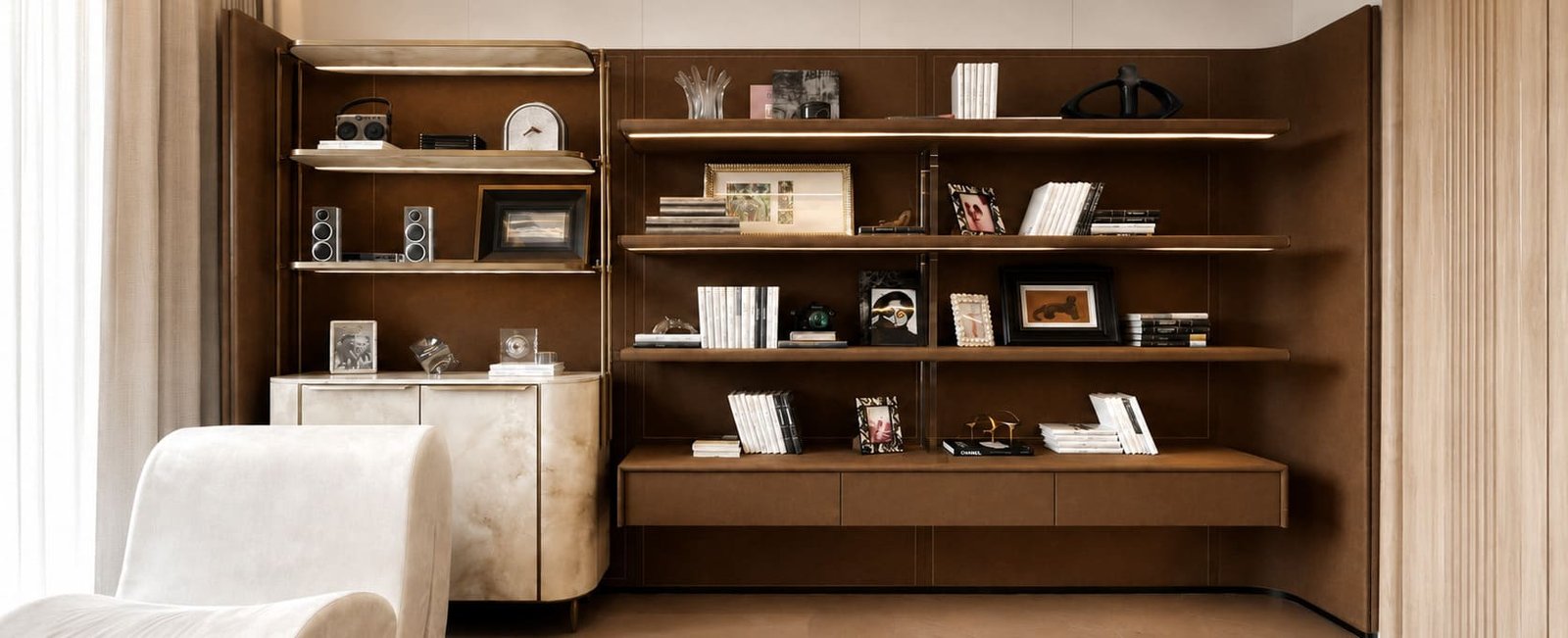
We use OSB less often in our factory than plywood, particleboard, and MDF. But it is still a substrate we use for custom cabinets. This article explains the basic structure and common grades of OSB, as well as the points that need to be confirmed when it is used for cabinet boxes and doors.
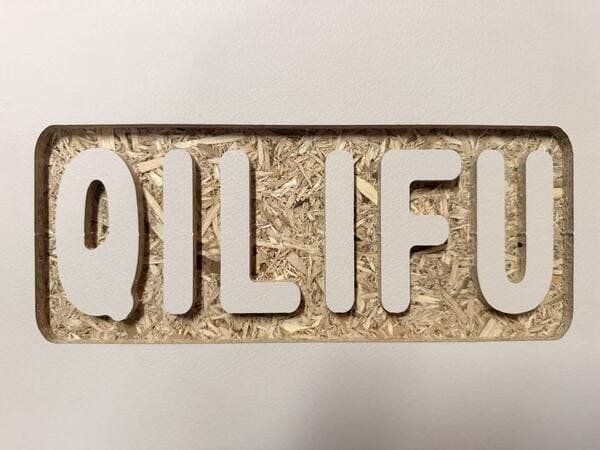
What Is OSB?
OSB stands for Oriented Strand Board. It is mainly made from long wood strands that are dried, mixed with resin, arranged in layers, and hot-pressed into panels. The strands in the surface and core layers are usually arranged in different directions. This is one of the main structural differences between OSB and standard particleboard.
Compared with particleboard, which uses smaller wood particles and has a relatively uniform internal structure, OSB uses longer strands with a more visible orientation.
What Are the Key Features of OSB's Oriented Structure?
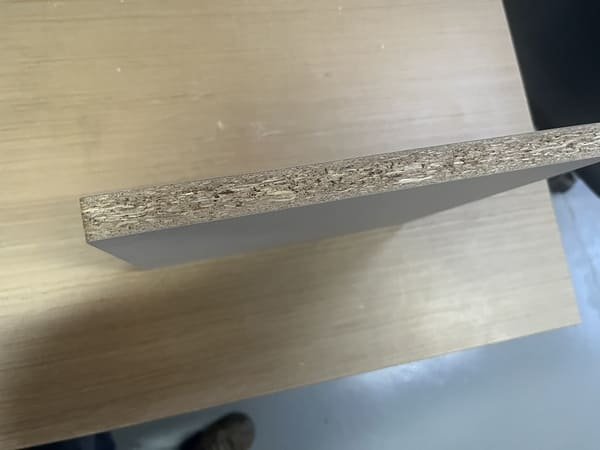
During production, the strands in different layers of OSB are arranged in specific directions. The surface strands are usually aligned with the major axis of the panel. The core strands are arranged in a different direction to improve the overall structural performance of the panel.
For common rectangular OSB panels, the major axis is usually parallel to the long edge. Bending strength and stiffness are also generally higher in this direction.1 However, the actual direction should still be confirmed through the panel markings or the technical information provided by the supplier. It should not be judged only by appearance.
The strand direction also needs to be considered when OSB is used for cabinet boxes and doors. However, direction alone does not determine whether a cabinet door will warp. Panel quality, thickness, door size, balanced finishes on both sides, and hardware configuration can all affect the final flatness and performance.
How Is OSB Different from Plywood, Particleboard, and MDF?
OSB, plywood, particleboard, and MDF can all be used as substrates for custom cabinets. The table below compares their internal structures, relative structural performance, and common applications.
| Substrate | Basic structure | Structural performance | Common cabinet applications |
|---|---|---|---|
| OSB | Long strands arranged in specific directions | Bending strength and stiffness along the major axis are usually higher than those of standard particleboard, but performance is not the same in every direction | Flat cabinet doors, cabinet boxes, and decorative panels |
| Plywood | Multiple wood veneers bonded in alternating directions | The veneers are arranged in different directions. This reduces the effect of the natural grain direction and provides more balanced performance in different directions. Actual stability still depends on core quality, bonding quality, and moisture content | Cabinet boxes, flat cabinet doors, and parts that require better fastening performance |
| Particleboard | Wood particles bonded and pressed together | The internal structure is relatively uniform and does not have the clear orientation of OSB. Standard non-load-bearing furniture particleboard is generally not designed for high structural loads | Cabinet boxes, shelves, and flat cabinet doors |
| MDF | Wood fibres bonded and pressed together | The fine and uniform fibre structure creates a smooth surface that is suitable for routing and painting, but structural load capacity is not its main advantage | Profiled cabinet doors, painted doors, and decorative mouldings |
However, these differences do not mean that one substrate is better in every situation. The final choice should also consider the panel grade and quality, application, panel size, finish, environmental conditions, and budget.
For a more detailed comparison, see our guide to choosing plywood, particleboard, and MDF for cabinet boxes and doors.
What Are the Common Grades of OSB?
Under the European standard EN 300, OSB is normally divided into four grades: OSB/1, OSB/2, OSB/3, and OSB/4.2
- OSB/1: For general purposes and interior fitments, including furniture, in dry conditions.
- OSB/2: Load-bearing boards for use in dry conditions.
- OSB/3: Load-bearing boards for use in humid conditions.
- OSB/4: Heavy-duty load-bearing boards for use in humid conditions.
The term “humid conditions” does not mean that the panel can remain submerged in water. It also does not mean that cabinet edges and water protection can be omitted. It means that the panel can meet the performance requirements of its grade under the conditions specified by the standard.
What Should Be Confirmed When OSB Is Used for Cabinet Boxes and Doors?
OSB has many of the same points to check as plywood, particleboard, and MDF. These include thickness, flatness, dimensional changes after exposure to moisture, formaldehyde emissions, incoming material inspection, and processing checks. These points will not be explained again in detail here.
For custom cabinets, we need to confirm the panel thickness, finish, part size, and use environment according to the specific cabinet component.
Is It Used for a Cabinet Box or a Cabinet Door?
OSB can be used for both cabinet boxes and cabinet doors. If a customer only writes “OSB” on the drawings, we still need to confirm which parts require this material.
Cabinet boxes, shelves, and doors have different dimensions, loading conditions, and hardware requirements. A material name alone is not a complete material specification.
Cabinet Door Size and Panel Thickness
Cabinet door thickness should be confirmed according to the panel size, weight, and hardware configuration. Increasing the panel thickness may improve stiffness, but it also increases the weight of the door. For this reason, increasing thickness alone cannot control door deformation.
Are the Finishes on Both Sides Balanced?
When OSB is used for a flat cabinet door, the finish structure on both sides should be kept as balanced as possible.
If only one side is finished, or if the materials and processing conditions on the two sides are very different, the stresses on each side may also be different. This can increase the risk of warping.
For melamine-faced cabinet doors, the facing material, thickness, and pressing conditions on both sides should therefore be relatively balanced. The two sides can use different colours, but their finish structures should not be significantly different.
Application Environment
For sink cabinets, bathroom vanities, and laundry cabinets, it is also necessary to consider sealed panel edges, sealing around cutouts, site ventilation, and the risk of water leakage.
If the environment remains humid for long periods, the decision to use OSB should still be based on the specific product information and the overall cabinet construction.
When confirming materials, we do not look at the name “OSB” alone. We review the application, thickness, panel size, finish, and hardware configuration together.
How Do We Currently Use OSB?
OSB is not used in large quantities in our factory. We normally purchase it according to the customer’s drawings or material requirements. Although it can be used for both cabinet boxes and doors, most of the OSB orders we have handled have used it for flat cabinet doors.
The OSB panels we have used were mainly 18mm and 22mm thick, usually with a melamine finish. The final thickness still needs to be selected according to the door size, weight, and hardware configuration.
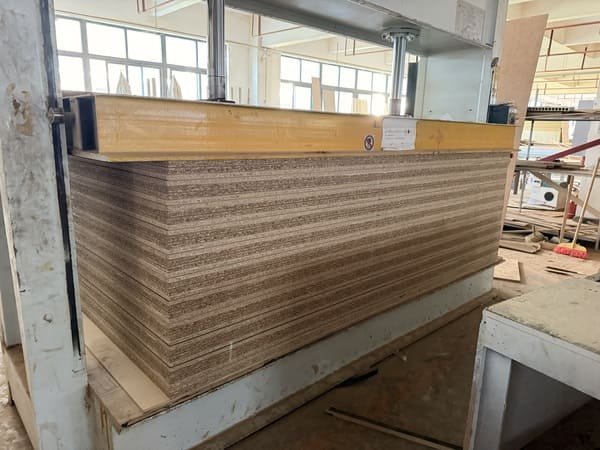
In comparison, we use particleboard, plywood, and MDF more often in our daily production. When a customer specifies OSB, or has different requirements for the thickness and structural performance of flat cabinet doors, we may consider melamine-faced OSB as an alternative.
Based on the supplier prices we have received, melamine-faced OSB usually costs more than commonly used melamine-faced particleboard. Therefore, for cabinet boxes or flat cabinet doors with standard environmental and structural requirements, especially when cost control is important, we do not automatically switch to OSB. We are more likely to use our standard particleboard solution.
This is our current material selection practice, but it does not mean that the same solution is suitable for every project.
Because the number of OSB orders we have handled is still limited, we have not yet collected enough long-term comparison data on different brands, grades, and thicknesses. The information about OSB structure and grades in this article is mainly based on public sources. The factory application section only covers the specifications and uses we have actually handled. Because our long-term comparison data is still limited, we do not make a general claim about the long-term stability of OSB.
Final Notes
OSB is commonly used for structural panels and building substrates. It can also be used as a substrate for custom cabinet boxes and doors. For furniture use, the panel grade, thickness, direction, finish, and specific application should all be confirmed.
At Horace Home, OSB is mainly used according to the customer’s drawings and material requirements. For cabinet boxes or doors made with OSB, we review the panel size, surface finish, and hardware configuration before confirming the construction details. The final material specifications are then added to the drawings or material list for the customer’s approval before production.