
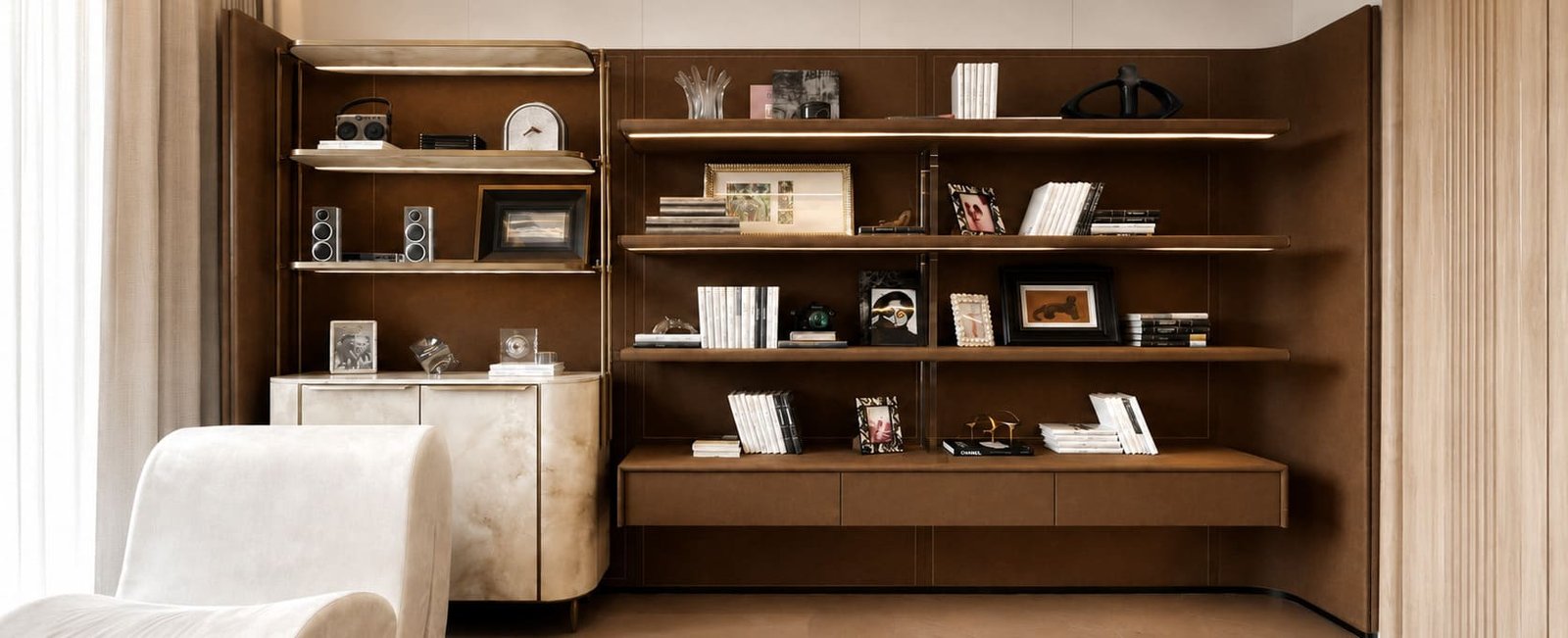
When producing custom wood veneer cabinet doors, confirming the wood species is usually not enough. For example, a client's drawing may simply say "White Oak Veneer Cabinet Doors." We still need to confirm the veneer thickness, grain direction, whether adjacent panels need grain matching, and the final color and surface finish.
In our previous article on wood veneer cabinets, we introduced the basic structure, common veneer types, substrates, and some typical applications. This article will not repeat those basics. Instead, we will focus on the details that need to be confirmed before production.
The natural variation, veneer selection, and veneer from the same log discussed below mainly refer to natural wood veneer. This article does not cover reconstituted veneer.
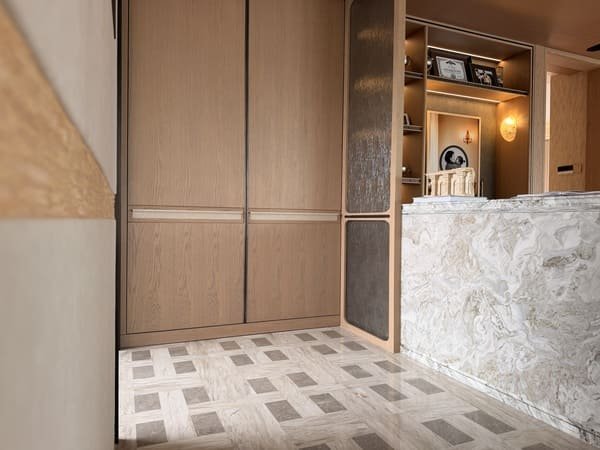
What Does "Grain Matching" Mean for Wood Veneer Cabinet Doors?
When confirming wood veneer cabinet doors, a client may simply say, "We need grain matching." But this is not specific enough. Keeping the same grain direction, keeping the overall grain visually coordinated, and creating continuous grain across adjacent doors1 are different requirements.
1. Grain Direction
Cabinet doors can use vertical grain or horizontal grain. In the wood veneer doors we currently produce, vertical grain is more common. If the design requires horizontal grain, we normally confirm it separately during the drawing or sample stage.
2. Visual Matching
This does not mean the grain on one door must continue directly onto the next door. Instead, the goal is to make adjacent panels look visually consistent in color, grain width, and overall grain pattern.
3. Continuous Grain Matching
For continuous grain matching, the veneer needs to be arranged according to the actual position of each cabinet door, so the grain continues from one door to the next. This requires more than keeping the same grain direction. Veneer selection, layout, and the production order of each panel also need to be controlled.
Before production, we therefore need to confirm what the client means by "grain matching." Different requirements will affect veneer selection, layout, and production.
Why Can the Same Natural Wood Veneer Still Look Different?
Natural wood veneer retains the natural grain and color variation of the wood. Even when the species has already been confirmed as white oak, walnut, or another wood species, there can still be differences in color, grain width, and grain pattern between veneer sheets.
These differences should not automatically be treated as material quality problems. A wood species can give a general idea of the color and grain, but it cannot make every natural veneer sheet look exactly the same.
Some differences may not be obvious when looking at one cabinet door by itself. When a full set of doors is installed side by side, differences between adjacent panels can become easier to notice. This is especially important for large continuous visible areas.
So when a project requires higher grain consistency, veneer selection, grouping, and layout also need to be considered before production. Confirming only the wood species is not enough.
How Do We Control Visual Matching and Continuous Grain Matching?
We have worked on projects with clear continuous grain matching requirements. In these cases, we consider several steps, from veneer sourcing to final layout.
1. Confirm the Veneer Material First
If a project requires higher grain consistency, we first confirm the material with our veneer supplier. When possible, we can purchase a batch of veneer from the same log. This can help keep the batch more consistent, but it does not mean every veneer sheet will look exactly the same.2
2. Sort and Match the Veneer After It Arrives
We sort and group the veneer by its actual color and grain. We use the more visually consistent veneer on the main visible surfaces.
3. Lay Out the Veneer by Door Position
For adjacent cabinet doors that require continuous grain matching, our previous method was to use a continuous group of veneer sheets and arrange them according to the actual position of each door. This allows the grain to continue from one door to the next.
4. Then Consider Other Visible Surfaces
If there is a wood veneer wall panel next to the cabinetry, we do not always require continuous grain matching between the wall panel and cabinet doors. However, we try to avoid very obvious differences in color or grain between these main visible surfaces.
We use a similar approach for cabinet side panels and corner areas. In the projects we have handled before, strict continuous grain matching was mainly used on adjacent front cabinet doors. For side panels and corner areas, we focused more on overall visual matching.
We do not use strict continuous grain matching as the default for every project. This method requires more veneer selection, layout work, and keeping each panel in the correct sequence. It also increases material waste and labor. For typical custom projects, we usually focus more on avoiding obvious grain mismatches on the main visible surfaces.
If the design clearly requires continuous grain and the budget can cover the extra material and production cost, we can still use this method. It is better to confirm this requirement during the quotation and pre-production stage, rather than after the veneer has already been applied.
How Does Veneer Thickness Affect Production?
0.3 mm and 0.6 mm are two veneer thicknesses that we commonly use. Our previous article introduced their basic applications. Here, we will focus on a few situations we have encountered during actual production.
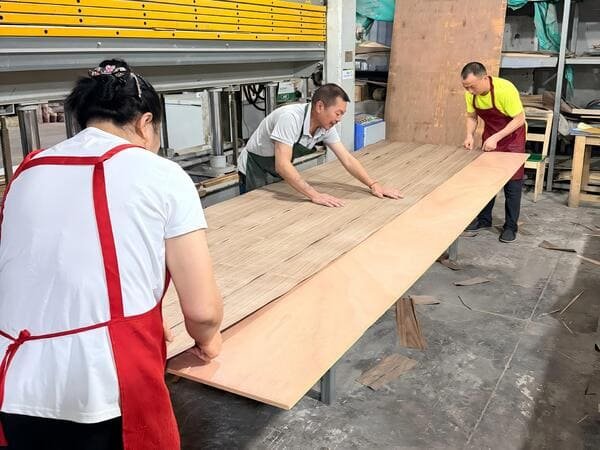
With our current production methods, we more commonly use 0.6 mm veneer for flat cabinet doors, applied by hot pressing. For curved or other shaped parts, we more often use 0.3 mm veneer for manual application. The thinner veneer is easier to apply to shaped surfaces.
One Issue We Encountered with 0.3 mm Red Oak Veneer
We previously used 0.3 mm red oak veneer on a batch of panels. After the veneer was applied and sanded, the substrate and some glue marks became more visible in certain areas.3 We later changed the veneer thickness to 0.6 mm, which made this type of issue easier to control.
This case does not mean that 0.3 mm veneer will always have this problem. Red oak or veneer thickness alone may not have been the cause. The substrate, adhesive layer, veneering process, and sanding can all affect the final result. After this experience, when we work with similar materials, we do not look at veneer thickness alone. We also consider the substrate, application method, and later sanding process.
One Difference Between Face Veneer and Edge-Banding Veneer
The 0.3 mm and 0.6 mm face veneers we currently use do not have backing. For edge banding, the 0.3 mm veneer we currently use usually has backing, while the 0.6 mm veneer usually does not. This is related to the edge-banding materials and bonding methods we currently use. It does not mean that all veneer suppliers use the same structure.
We have discussed veneer edge banding and edge quality in a previous article, so we will not repeat that part here.
How Do We Use an Approved Veneer Sample for Batch Production?
Our previous article explained what needs to be confirmed on a wood veneer sample. After the client approves the sample, we continue to use it as a reference during batch production.
1. Keep the Approved Sample
We keep one approved sample in the workshop as a physical reference for later production.
2. Adjust the Color and Finish Based on the Sample
Before batch production starts, we first adjust the color and surface finish to match the approved sample, then make one production panel.
3. Compare the First Production Panel
After the first production panel is finished, we compare it directly with the approved sample. We mainly check for obvious differences in color, sheen, and overall appearance.
4. Start Batch Production After Confirmation
If there are no major problems with the first production panel, we continue with batch production.
5. Continue Spot Checks During Production
During batch production, we also inspect selected panels and compare them with the approved sample.
Natural wood veneer varies from sheet to sheet, so the goal is not to make the natural grain of every panel exactly the same as the sample. The sample helps us keep the batch consistent with the approved color, sheen, and overall surface appearance.
What Should Be Confirmed Before Ordering Wood Veneer Cabinet Doors?
Before quotation and production, we normally review the main requirements again. This helps avoid situations where both sides say "white oak veneer cabinet doors" but have different expectations for the final result.
| Item to Confirm | Main Effect |
|---|---|
| Veneer type and wood species | Defines the basic grain and color range |
| Veneer thickness | Affects the veneering method and later processing |
| Grain direction | Confirms vertical or horizontal grain |
| Grain matching requirement | Confirms whether only visual matching or continuous grain matching is required; affects veneer selection, layout, material waste, and labor |
| Main visible surfaces | Defines which areas need more attention for visual matching |
| Final color and sheen | Defines the final surface finish |
| Approved sample | Provides a physical reference for batch production |
Not every project needs the highest level of grain control.
For example, some cabinet doors only need consistent vertical grain and overall visual consistency across the main visible surfaces. In this case, there may be no need to add the material waste and labor required for strict continuous grain matching.
If the design includes a large run of adjacent cabinet doors, adjacent wood veneer panels, or a clear requirement for natural grain continuity, the exact locations and matching requirements should be confirmed before production.
Once these requirements are clearly defined in the drawings or quotation stage, the factory can prepare the veneer, calculate material waste, and plan the veneer layout and production accordingly.
Final Notes
Wood species is only one part of a wood veneer cabinet door specification. For natural wood veneer, veneer thickness, grain direction, grain matching requirements, and the final approved sample should also be confirmed before materials are prepared and production begins.
When Horace Home receives drawings or renderings for a wood veneer cabinetry project, we also confirm these details before production. If the design has special requirements for grain continuity, it is better to define them during the quotation and sample stage so the material preparation and production method are clear from the start.