
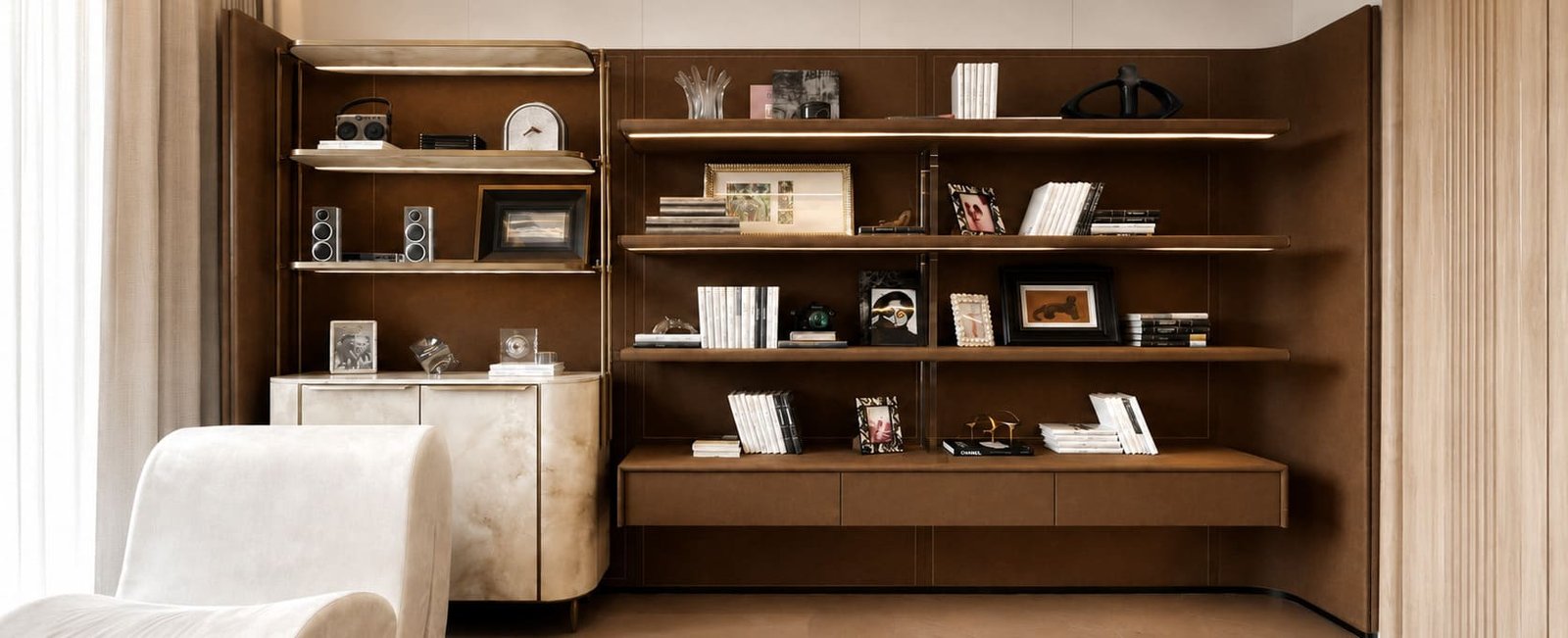
In the previous article, we introduced the basic structure of melamine-faced board. One important point is that melamine finishes can be combined with different substrates.
In actual whole-home custom cabinetry projects, this difference becomes more important. Even when two products are both called “melamine cabinets,” we may consider the substrate and structure differently depending on whether they are used for a wardrobe, a kitchen wall cabinet, or a sink cabinet. The appearance the client wants, the project budget, and the production schedule can also affect the final material combination.
So in this article, we will continue with a more practical question: how should melamine finishes be matched and used in a complete custom cabinetry project?
What Is the Difference Between Melamine, MFC, TFL, and Laminate?
In the Chinese market we work with, “melamine board” is usually a fairly clear everyday term. It is generally not confused with HPL. But in international markets, different regions use different common terms, which can sometimes cause confusion during purchasing.
Melamine-Faced Board is a relatively broad term. It mainly means that the board has a melamine finish on the surface.
MFC stands for Melamine Faced Chipboard. This term is more specific because it clearly tells us that the substrate is chipboard and the surface uses a melamine finish.
TFL usually means Thermally Fused Laminate1 and is commonly seen in North American material specifications. It also describes a surface system where decorative paper is impregnated with resin and then bonded directly to the board substrate using heat and pressure.
HPL, or High Pressure Laminate2, has a different structure. HPL is first manufactured as a separate laminate sheet and is then bonded to a substrate with adhesive.
In one cabinetry inquiry from Australia, the client first used the word “laminate” and later used “melamine” during the same discussion. Because of this, when a client only asks for “laminate cabinets” or “melamine cabinets,” we normally do not select the material immediately. We first confirm the surface appearance, substrate, and specific construction.
Why Is Melamine So Common in Whole-Home Custom Cabinetry?
Melamine is usually a finish with relatively easy-to-control costs. But from the point of view of custom cabinetry production, price is only one factor we consider.
For the B2B custom projects we work with, we normally pay more attention to production time, cost, and color consistency across larger quantities. Surface wear resistance and daily maintenance are also important.
The difference in production time can be seen quite clearly from the processing steps.
After melamine-faced boards arrive at our factory, normal panels can usually go directly through:
Cutting → Edge banding → Drilling or CNC
For veneer with a painted finish, our normal production process is closer to:
Cutting → Sanding → Veneer application → Veneer or solid wood edge banding → Sanding → Primer → Sanding → Painting
Depending on the final color and surface effect, the number of painting and intermediate sanding steps can also vary.
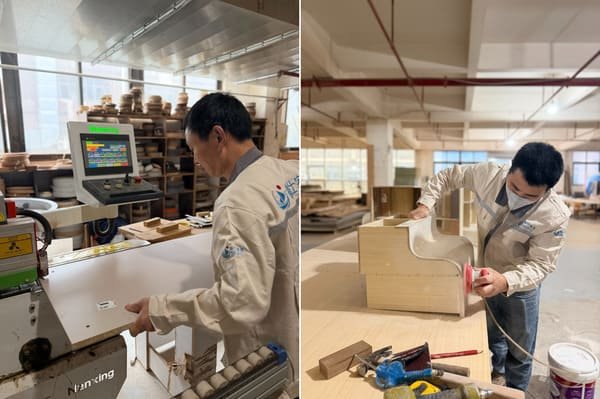
We have produced two sales center projects with similar building areas and similar amounts of cabinetry, but with different surface finishes. For the project using melamine finishes, the cabinetry production time was about 25–30 days. For another project of a similar scale using veneer with a painted finish, the production time was about 40–45 days.
These two projects were not controlled comparison tests. Cabinet quantity, design complexity, paint finish, and the production schedule can all affect the final lead time. These figures only represent our production records from two projects of a similar scale. From the production process itself, melamine removes several later steps such as veneer application, repeated sanding, and painting. For larger custom projects, this usually makes both cost and production time easier to control.
Why Is “Melamine Cabinet” Not a Complete Purchasing Specification?
If a client tells me, “I need melamine cabinets,” we normally do not quote immediately. We first confirm several details.
We first look at the appearance the client wants. Then we review the drawings to confirm the space and the specific cabinet location. After that, we ask whether the substrate has already been specified. If not, we make suggestions based on the environment, cabinet structure, and budget.
Melamine mainly deals with the surface finish, but the performance of the whole cabinet is not determined by the finish alone. For example, two cabinets can use the same wood-grain melamine surface, while one uses standard particleboard as the substrate and the other uses plywood. Both may work well in a normal wardrobe. But when they are used for a sink cabinet, our considerations are different.
So when a project reaches the formal quotation and production stage, “melamine cabinet” is only a starting point. It is not yet a complete material specification.
How Should Substrates Be Matched with Melamine in Different Spaces?
Based on this difference, we use different material combinations for wardrobes, kitchens, and bathroom vanities.
Wardrobes
Wardrobes are usually installed in relatively dry indoor environments and have little direct contact with water. When the project budget needs to be controlled, a common combination for us is particleboard + melamine finish.
For wardrobe carcasses and normal flat cabinet doors, this combination can balance production efficiency and cost.
Kitchens
Melamine finishes can be used in kitchens, but the substrate needs more attention. For standard wall cabinets without unusual moisture conditions, we may consider particleboard + melamine. For base cabinets, sink cabinets, and other areas with more exposure to water or long-term moisture, we normally give priority to plywood + melamine.
In this case, the main change is the substrate. The melamine surface can remain the same.
The melamine surface itself can provide some protection against normal moisture, but a finished cabinet panel still has edge banding, cut-outs, and hardware fixing holes. If water enters through these areas over a long period, the substrate inside can still be affected.
For kitchen material selection, we therefore pay more attention to the substrate and the actual level of water exposure, rather than simply asking whether melamine can be used.
Bathroom Vanities
The logic for bathroom vanities is similar to kitchens, but long-term humidity and water exposure are usually higher. For vanity carcasses, we normally give priority to plywood, while the surface can still use melamine.
If the client also wants a more natural wood appearance, we may consider plywood + veneer + paint. With the process we currently use, the panel surface and edges continue through the coating process after the veneer is applied.
This does not mean that veneer with paint is always more waterproof than melamine. Final performance still depends on the paint system, edge treatment, cut-outs, joints, and production quality. We also do not simply say that particleboard cannot be used anywhere in a bathroom.
Different parts of a bathroom vanity face different levels of water exposure. The cabinet bottom, areas around plumbing, and places where water may collect have higher risks, while cabinet doors normally do not face the same level of direct water exposure. We therefore select materials according to the location and use of each panel.
Is Melamine Suitable for All Cabinet Doors?
Melamine finishes are more suitable for flat cabinet doors. Not every cabinet door design is suitable for this type of finish. For simple wood grains, solid colors, and other flat surface effects, melamine already provides a finished surface and does not require complicated additional coating work.
For standard flat cabinet doors, we commonly use a thickness of 22 mm, with 25 mm used in some cases. The final thickness depends on the height, width, and overall structure of the door. For clearly oversized cabinet doors, if the stability of standard wood-based panels becomes a major concern, we do not simply keep increasing the thickness. Instead, we reconsider the door structure, such as using the aluminum honeycomb panels discussed in our previous article.
If the client needs profiled doors, routed doors, or high-gloss painted finishes, we normally give priority to MDF with a painted finish.
When Is Melamine Wood Grain Enough, and When Should You Choose Veneer?
The melamine wood-grain options we currently work with are already quite varied. We have also worked with deeply embossed melamine surfaces. Compared with standard wood-grain finishes, we have observed that deeper textures can look and feel closer to natural wood. But they still do not create exactly the same visual effect as natural veneer.
On normal-sized cabinet doors, the difference may not always be obvious. Melamine can provide relatively consistent oak, walnut, and other wood-grain effects. But on large full-wall cabinetry, we have observed that the regularity and repetition of printed decorative paper become easier to notice. Natural veneer has more natural variation from piece to piece, so the overall result usually looks more natural.
If the client mainly focuses on budget, consistency across larger quantities, and lead time, melamine may already be enough. If the client places more importance on natural wood variation and overall texture, we usually discuss veneer first.
How Should Different Materials Be Combined in a Whole-Home Custom Project?
In a fully custom project, we can select different materials for different spaces and cabinet parts. There is no need to use one material combination throughout the whole home. The final combination mainly depends on appearance, location, budget, and production schedule.
For example, suppose a developer needs cabinetry for 50 apartments. The budget is limited, the lead time is relatively tight, but the overall appearance still needs a certain level of quality. If the client has not specified the materials in more detail, our first-round recommendation may look like this:
| Location | Initial Material Combination |
|---|---|
| Wardrobe carcass | Particleboard + melamine |
| Wardrobe doors | Particleboard + melamine |
| Kitchen carcass | Plywood + melamine |
| Kitchen doors | Particleboard + veneer + paint |
| Bathroom vanity carcass | Plywood + melamine |
| Bathroom vanity doors | Particleboard + veneer + paint |
In this combination, wardrobes focus more on cost and production efficiency. Kitchen and bathroom carcasses have higher moisture risks, so more of the budget is placed on the substrate. Cabinet doors have a direct impact on the overall appearance, so if the client wants to improve the visual result, part of the budget can be used for veneer and paint.
For custom projects, we prefer to put more of the budget into areas that clearly affect use and appearance, rather than upgrading every material at the same time.
Final Notes
The value of melamine finishes is not only about cost. For custom cabinetry, production time, consistency across larger quantities, and the flexibility to combine melamine with different substrates are also important.
When Horace Home prepares a material configuration for custom cabinetry, we normally start with the appearance the client wants, the actual application area, budget, and lead time. We then decide which substrate and finish are more suitable for each location. For custom cabinetry, this is usually more practical than trying to find one so-called “best board.”